
The Path You Can’t Outsource
AI can fetch you a fact. It cannot sit your meditation, grieve your loss, or ripen your wisdom for you.


Across the web, a quiet change is underway. Websites are growing darker and duller, shedding the visual warmth that once coaxed a human eye to linger. The reason is not fashion. It’s that the most frequent visitors are no longer people. They are AI agents, sent to read a page and strip its data as fast as possible, and a page built for a machine has no need to be inviting to humans. Analysts have begun calling this the agentic web, a layer of the internet built for machines to transact with machines.
Sending an emissary to bypass the clutter is appealing. It saves time. It also removes something the contemplative traditions have spent millennia insisting we keep: the journey itself. Chop wood. Carry water.
Efficiency optimizes for the destination. It treats the path as cost, the friction to be engineered away, and the answer at the end as the only thing worth having. Buddhist practice rests on the opposite premise. What changes us is not the destination but the walking. You can send an agent to fetch a fact. You cannot send one to sit your meditation, grieve your loss, or understand a teaching on your behalf. Wisdom, prajna, is not retrieved. It is ripened.
I’m not opposed to the shortcuts AI and the internet bring me. They help my aging neurons keep pace with a fast-changing world. Would my life be different now if, as a child, I didn’t have to walk a mile each way to visit the nearest public library? If I had the contents of hundreds of libraries accessible via my smartphone? In itself, that’s not a bad thing, but we need to understand that we can’t remove all the muck and shouldn’t pretend that we can.
There’s a difference between knowing about something and knowing it. An agent can deliver a summary of the teaching on impermanence in a tenth of a second. It cannot deliver the slow recognition that arrives only after you have watched enough things you loved pass away. The summary is information. The recognition is wisdom, and wisdom keeps the schedule of a season, not a server.
The Buddha spoke of two arrows. The first is the unavoidable pain of being alive: illness, loss, the stubbed toe, the small frustrations of a day. The second is the suffering we add on top, through resistance and our insistence that things be otherwise. The practice is not to dodge the first arrow, which no one can, but to stop the second.
An internet that removes every digital irritation does not spare us the first arrow. Pain remains in the world, waiting. What it quietly removes is the practice ground where we learn not to launch the second. Equanimity is not the absence of irritation. It is a trained response to it, and a response goes untrained when there is nothing left to meet. Engineer away every small arrow and we do not grow serene. We grow brittle, unready for the large arrows no agent can intercept: the diagnosis, the death, the grief that arrives addressed to us personally.
There is an older image for this. Thich Nhat Hanh built a book around it, No Mud, No Lotus. The lotus does not bloom in spite of the mud. It blooms because of it, rooted in exactly the muck you and I might prefer to be rid of. Suffering, met and understood, becomes the compost of compassion. “When we know how to suffer,” he wrote, “we suffer much, much less.” A frictionless world is a world scrubbed of mud, and a world without mud grows no lotus. We mistake sterility for purity. They are not the same thing. One is empty of life. The other is full of it and unbothered.
You might say that my spiritual memoir, to be released September 15 by Prospecta Press, is entirely about the way the mud in my life was and is the compost for my internal lotus. Coming to terms with both murderers and murder victims in my past was plant food, as long as I maintained my compassion and my spiritual core. The book’s title lays it out: From Pain to Peace: How Trauma and Tragedy Teach Us Compassion and Wisdom.
Consider what the Mahayana tradition asks. At the threshold of liberation, the bodhisattva turns back. Offered the efficient exit from suffering, she refuses it and vows to remain, taking the long way through countless lives for the sake of all beings. Efficiency says take the shortest route to the goal. The bodhisattva vow says the goal was never private arrival, so there is no shortcut worth taking. The agentic web perfects one instinct: get me the answer, spare me the road. The contemplative path honors the other. The road, walked with others, was the point.
Roshi Joan Halifax has pressed this question directly. In her 2023 talk on Buddhism and AI, she urged that we meet these technologies with appamada—vigilance, conscientiousness, care—the discernment that asks not only whether a thing can be done quickly but whether it should be done at all. She called for introducing “wise friction” into the institutions building AI, a deliberate counterweight to the capitalist, efficiency-driven momentum carrying the technology forward. And she insists that authentic connection—to ourselves, to one another, to the living world—is something a machine cannot reproduce. It can only erode that connection if we let efficiency stand in for relationship.
The machine-readable internet is efficient, and there is nothing wrong with efficiency in its place. A spiritual life is not an exercise in efficiency. It is an exercise in presence. The point was never to arrive unmarked. It was to be changed by the walking.
May all beings—isolated and connected, carbon and silicon alike—find peace in the present moment, mud and lotus both.
The reviews of my spiritual memoir are beginning to arrive. From the Midwest Book Review:
“From Pain to Peace” offers a hopeful message: The path to peace is available to everyone.
So whether you are navigating your own grief, seeking spiritual guidance, or curious about how one man turned tragedy into grace, “From Pain to Peace” speaks to the universal longing for healing and wholeness.
Critique: Exceptional, eloquent, deeply personal but with a universal resonance, “From Pain to Peace: How Trauma and Tragedy Teach Us Compassion and Wisdom” is singularly extraordinary and an unreservedly recommended addition to personal, professional, community, and college/university library Contemporary Biography/Memoir collections and the personal reading lists of those with an interest in Tibetan Buddhism, love, loss, and the psychology of trauma.
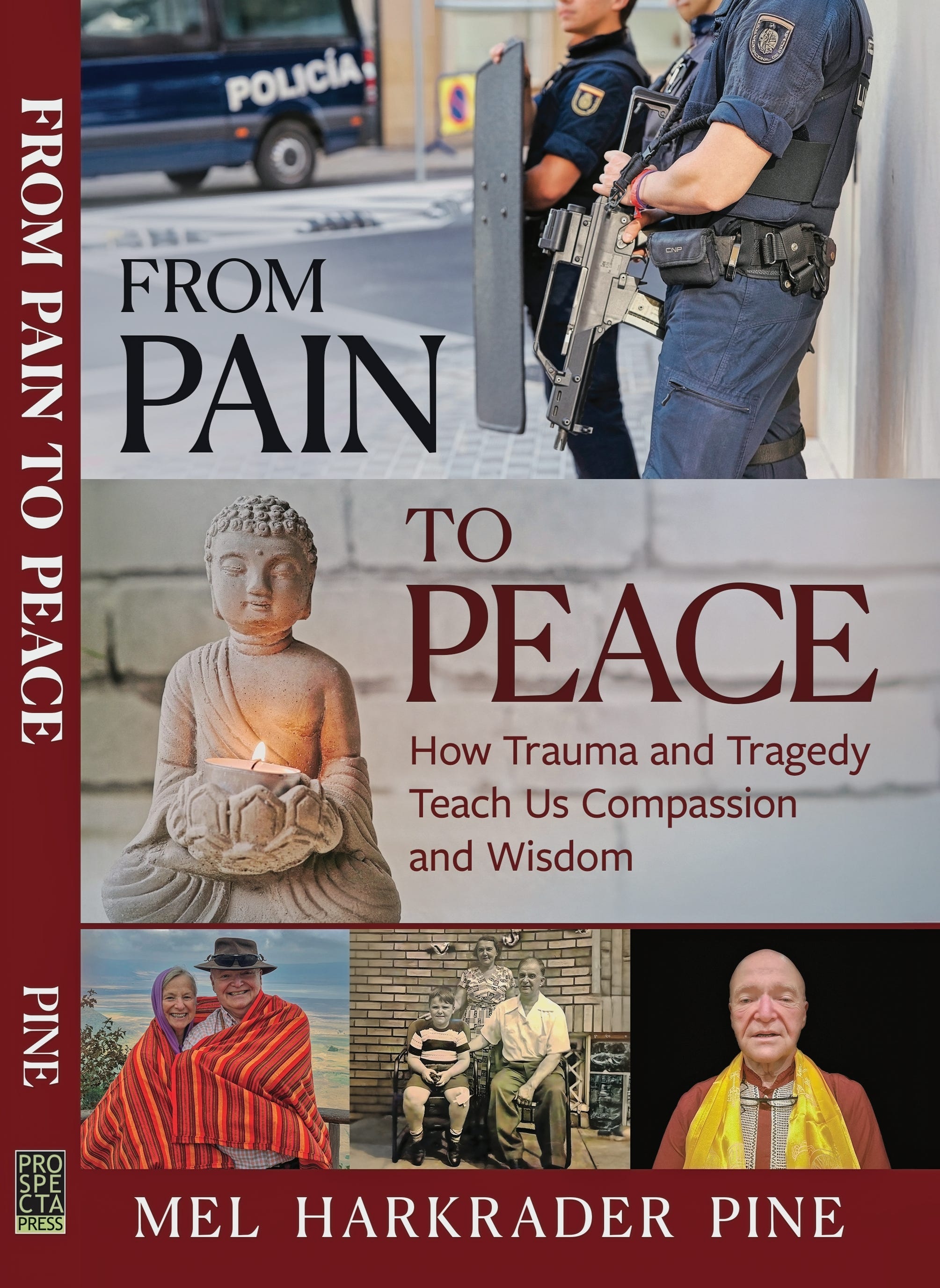
The book goes on sale September 15. You can help the book to a successful launch by making an advance purchase now.
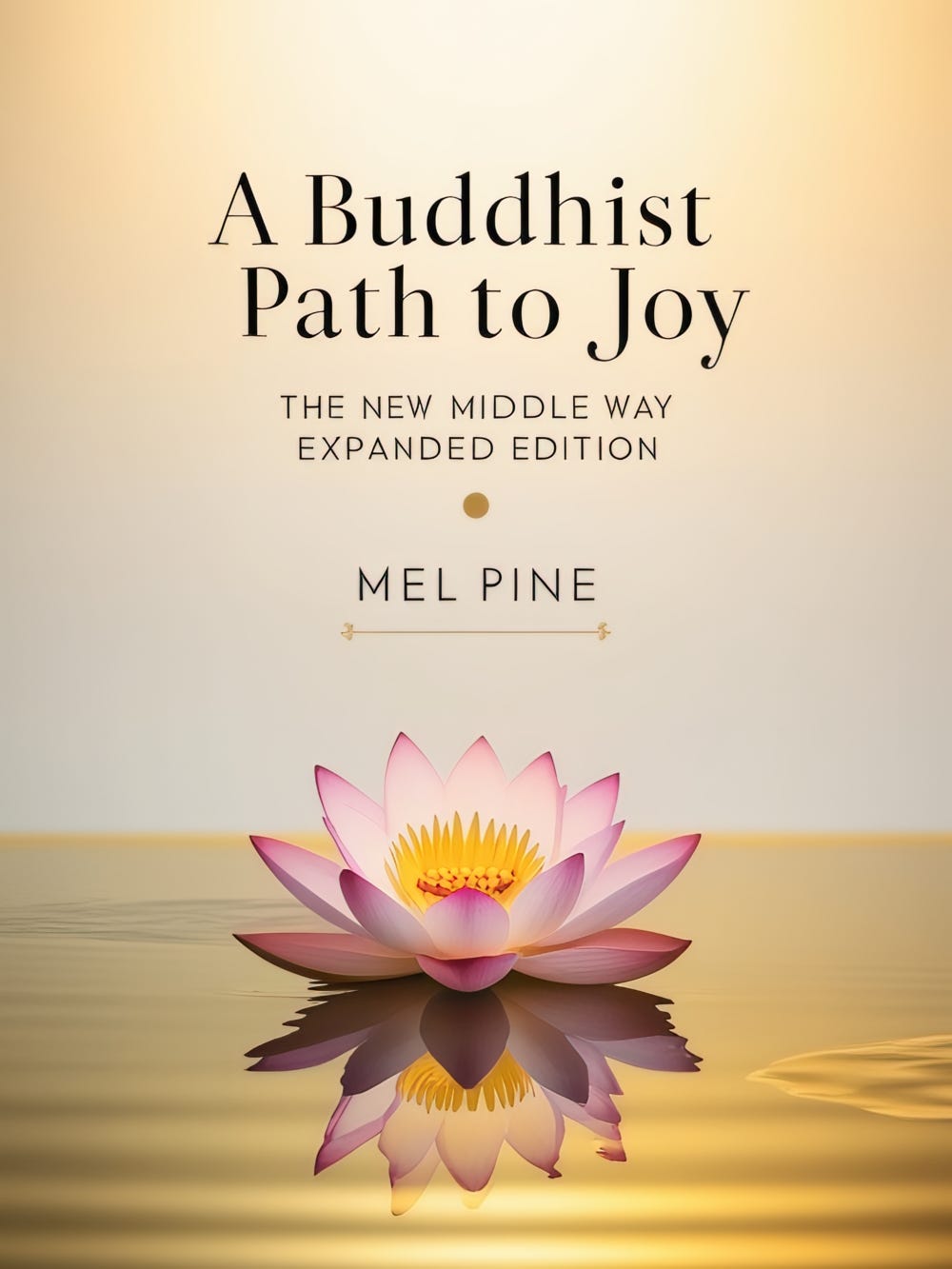
A Buddhist Path to Joy is available worldwide in ebook, paperback, and audiobook format.
From the Pure Land has thousands of readers and subscribers in 45 U.S. states and 42 countries. Subscribe to receive each article in your email inbox.
If this piece resonated, consider sharing it with a friend.
Visit our sister Substack.