
Suffering as Companion
Even the most realized teachers grieve. On the body, impermanence, and meeting suffering as a life companion rather than an enemy.


When I lost my son, I went on retreat seven months later still unable to settle into the practice I knew would carry me through. I told my teacher, Lama Surya Das, that I kept being swept off the cushion by my own thoughts, and that I could not find my way back to meditation even though I knew it was exactly what I needed. He answered with a question. “Didn’t you just lose your son?” Yes, I said. Seven months ago. “Mourning him,” he told me, “is your practice.”
Then he told me a story I had heard before. No one tells it the way he does, so I will give you my version of his.
Marpa was the eleventh-century Tibetan translator who walked to India and back three times to bring the Dharma home, and the teacher of the beloved Milarepa. He doted on his firstborn son, Darma Dode, and meant to make the boy his heir. Before a festival day, he made Darma Dode promise not to ride a certain dangerous horse. The boy slipped away on the horse anyway, was thrown, struck his head on a rock, and died at once.
When the villagers carried the body to him, Marpa sat down, covered his head, and wept without stopping for a week. His students were confused. “You teach us that life is a dream, an illusion,” they said, “and yet here you sit weeping over your son.”
Marpa lowered the cloth, looked at them, and answered:
You are right. Life is a dream. And losing a son is a nightmare.
Then he drew the cover back over his head and wept for another week.
Even the most highly realized teachers carry feelings that have to be moved through before they can return to the cushion and continue work. What I understand now, a decade after first hearing the story, is that Marpa knew something in every moment of his weeping. He knew his equanimity would return. He understood that his grief, like everything, was impermanent. The teaching is not to skip the grief. The teaching is to tend to your pain, to keep some compassion for yourself, and to trust that the rest of the healing follows.
Over the seven months between Thomas’s death and that retreat, I went through the daily routine of operating a business and selling it. I handled the details that need to be tended to when an unmarried 29-year-old family member dies. But I couldn’t calm my mind enough to meditate. The retreat changed that.
The body keeps its own appointment
A panic attack is its own kind of nightmare, and it can also be a teacher. Beth Robins Roth, a Buddhist meditation teacher and Somatic Experiencing practitioner, opens her June 6 essay in Tricycle, The Dharma of the Nervous System, by walking into a hospital lobby, a place wired to an old wound. Her heart slams. Her hands shake. Tears arrive without warning.
She doesn’t try to think her way out. She presses her feet into the floor. She breathes on purpose. She names each sensation as it rises and watches it shift, then shift again. She texts two friends, not for advice but for the steadying current of connection. Within minutes the wave moves through her and is gone.
From that small episode Roth draws a larger convergence. She sets the Buddha’s framing of his whole teaching, that he taught suffering and the end of suffering, alongside Somatic Experiencing’s understanding of trauma as a physical injury to the autonomic nervous system. The breath-and-body awareness of the Satipatthana Sutta, she writes, prepared her for the slow somatic work of self-regulation: tracking the breath, the heartbeat, the small movements of the face, letting the nervous system finish what it could not finish at the time of the wound.
Roth is candid about a limit that matters. Sitting practice alone did not heal the severe trauma she carried as an adult. Meditation was preparation, and excellent preparation, but it was the embodied work that finally let her nervous system release what it held. That honesty is a guardrail against the comfortable half-truth that we can simply sit still and watch our wounds dissolve. The panic attack, met with attention and with connection, taught her something the cushion alone could not.
I, too, have been traumatized by hospitals. My surgeon brought the wrong stuff for a hip replacement. The operation took twice as long as it should have as the surgeon jury-rigged the joint. Back in the hospital room in the hours after the surgery, I twice needed to call frantically for a nurse as I suffered severe hypotension. It took two units of blood in a post-op transfusion to steady me, and then, back home, my hip dislocated three times in a week, meaning I needed a second surgery to fix the first.
That left me terrified of hospitals. But 12 years later, as I was facing surgery on my other hip, a friend asked me how my practice had prepared me for my operation. I hadn’t realized it until that moment, but the fear was gone. I knew that I’d face it moment by moment.
Where goodness comes from
If suffering can teach, what does it teach us toward? Roshi Joan Halifax, the founder of Upaya Zen Center, writes in her May 18 An Architecture of Goodness article about her mother, a woman she could never fully know: a wartime Red Cross volunteer who sat beside wounded soldiers, whose own father had died by suicide, and who herself later died from alcohol. Out of that unknowable inheritance Halifax asks where good action actually comes from, and she names its inner structure. Motivation, the often hidden ground of why we act. Intention, the aim we set. Commitment, staying with the aim over time. Atonement, meeting and repairing the harm we cause. Vows, the binding aspirations that hold a life together.
Halifax refuses to flatten anyone, herself included, to a single clean motive. Human motivation is mixed, she holds, and partly opaque even to the one who acts. Goodness is not a trait we possess but something built and rebuilt through practice. Atonement, in her telling, is not guilt. It is the ongoing work of turning back toward care. A parent’s hidden suffering, she suggests without quite saying it, can be the seedbed of a child’s compassion.
The glass and the four joys
Suffering Is Also Your Life’s Companion, a Dharma message from the Rissho Kosei-kai tradition this month, holds up a glass filled halfway with water. The water is the only fact in the picture. Whether the glass brings complaint, gladness, or gratitude is something we add. Grounded in the Heart Sutra’s teaching that all forms are empty, the message suggests that many of the roots of our suffering are seeds we ourselves planted, through prejudice, craving, doubt, and attachment.
It then reframes the four classic sufferings of Buddhism, birth, aging, illness, and death, as possible “four joys,” borrowing the phrase from the physician Ko Hirasawa. It does this without a trace of forced cheer. It refuses outright to ask anyone to smile through pain. What it asks instead is that we view suffering through impermanence and dependent origination, and let hardship become, in its words, “provisions for life and joy.” We live fully, it concludes, by accepting both suffering and joy as our companions.
Neither Halifax’s essay nor this one pastes positivity over pain. Both insist that meaning is made slowly, inside a framework, through practice, and never by command.
From Pain to Peace
Many Buddhist teachers describe wisdom and compassion as the two wings of a bird. Neither flies alone. Compassion without wisdom turns sentimental, even harmful. Wisdom without compassion turns cold. Looking back, the path from suffering to those two wings can look almost straight. It only looks straight from the far end. While we are walking it, it needs teachers, friends, and a tradition to keep it from wandering off into mere pain.
I wrote my spiritual memoir, From Pain to Peace: How Trauma and Tragedy Teach Us Compassion and Wisdom, hoping that it would help others going through difficult times. Having compassion for ourselves is the first step. It’s OK to have a panic attack in a hospital lobby. It’s OK to question our own goodness. Self-compassion, especially if experienced in a spiritual framework, inevitably leads outward. Compassion for others, informed by our own experiences of suffering, is the heart of wisdom.
Grief like Marpa’s and like mine over the sudden and violent death of a loved one is its own practice.
May all those who grieve find patience and compassion for themselves and turn the wisdom they gain into a balm for others.
From the Midwest Book Review:
“From Pain to Peace” offers a hopeful message: The path to peace is available to everyone.
So whether you are navigating your own grief, seeking spiritual guidance, or curious about how one man turned tragedy into grace, “From Pain to Peace” speaks to the universal longing for healing and wholeness.
Critique: Exceptional, eloquent, deeply personal but with a universal resonance, “From Pain to Peace: How Trauma and Tragedy Teach Us Compassion and Wisdom” is singularly extraordinary and an unreservedly recommended addition to personal, professional, community, and college/university library Contemporary Biography/Memoir collections and the personal reading lists of those with an interest in Tibetan Buddhism, love, loss, and the psychology of trauma.
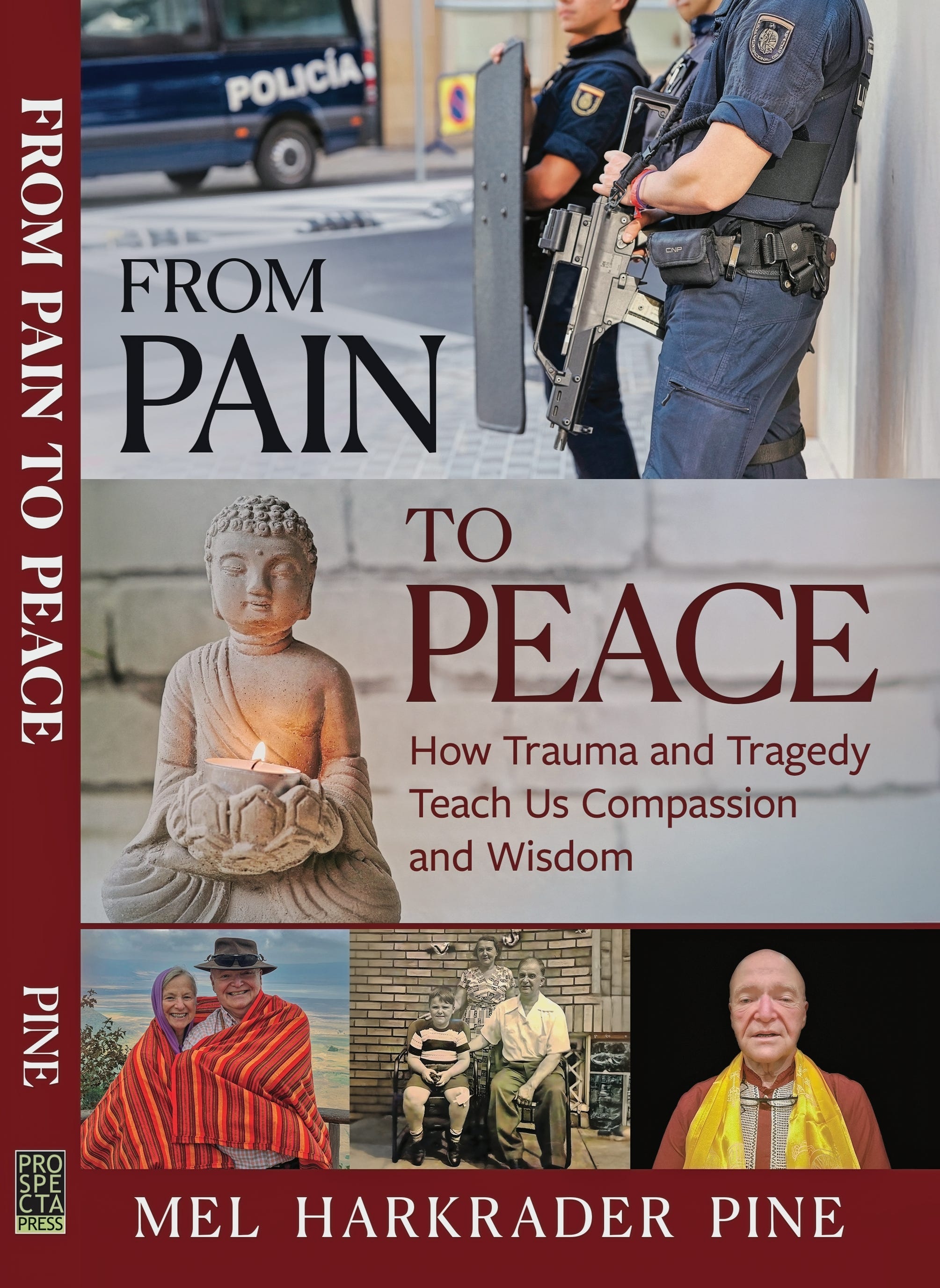
The book goes on sale September 15. You can help the book to a successful launch making an advance purchase now.
My redesigned free twice monthly newsletter is Awakening to Joy: Buddhism - AI - The Human Frontier. The next issue can be in your inbox July 1.
A Buddhist Path to Joy is available worldwide in ebook, paperback, and audiobook format.
From the Pure Land has thousands of readers and subscribers in 46 U.S. states and 46 countries. Subscribe to receive each article in your email inbox.
If this piece resonated, consider sharing it with a friend.
Visit our sister Substack.
Very wise!