
Finding the Right Page
A sociologist spent a decade studying a Buddhist prayer festival. Her most important finding was about losing your place.

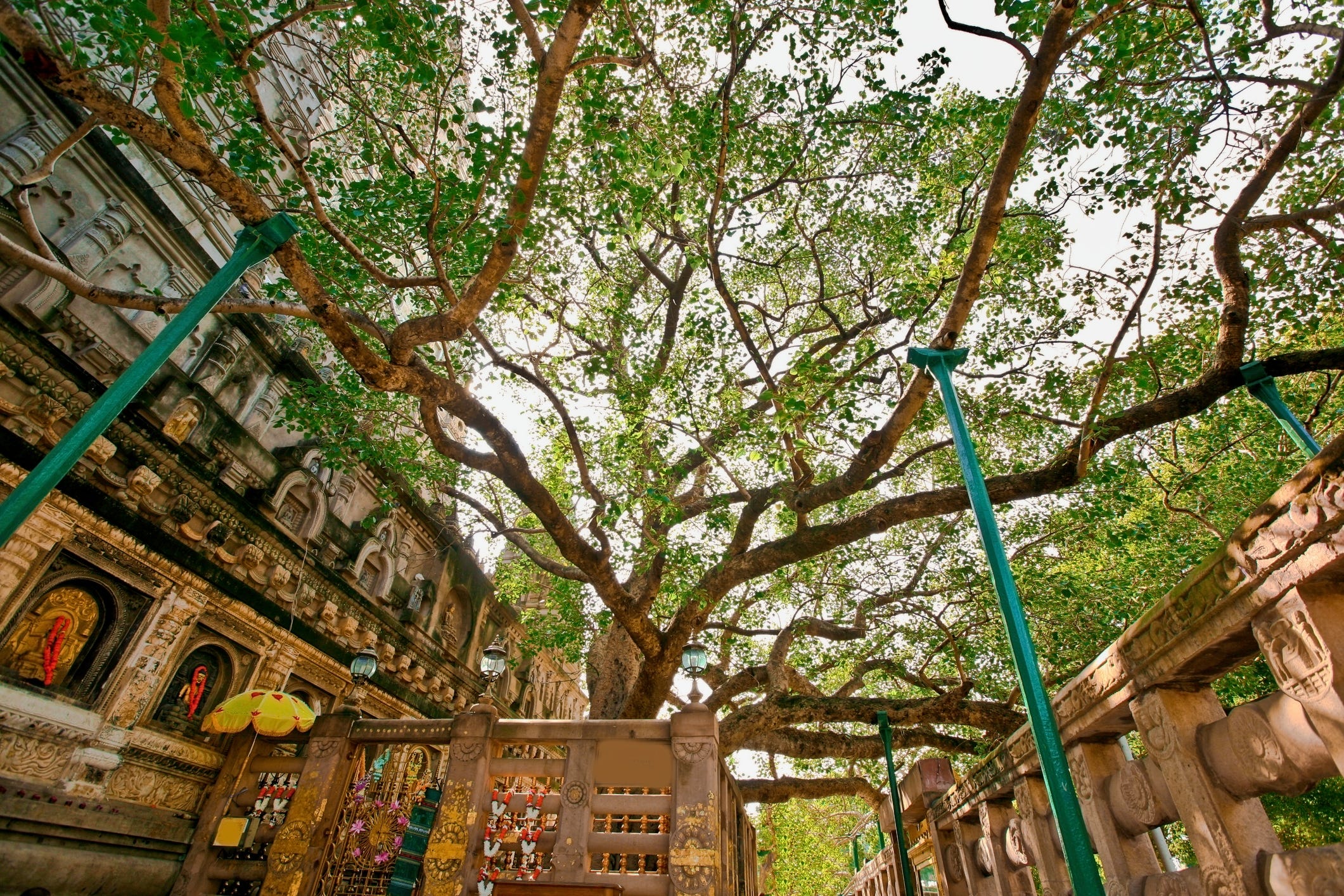
Well before 7 in the morning, in the December cold of Bodh Gaya, India, people are already gathering under the Bodhi Tree. They arrive wrapped in shawls and blankets, carrying prayer books, thermoses, extra socks.
This is sacred ground, where the Buddha is said to have reached enlightenment more that 2,500 years ago.
Monks settle into rows already assigned to them by the monastery. Lay practitioners negotiate their own spots. Many return years in a row to the same patch of ground, the same view of the leaders, the same proximity to sangha mates who have become old friends. They adjust blankets, greet familiar faces, and wait. Then a chant leader’s voice rises, and the morning gathers itself into rhythm.
This is the opening scene of a study published this week by Malwina Krajewska, a Polish sociologist of religion who has been attending this ceremony on and off, since 2014. It’s the Monlam Chenmo, an annual prayer festival held by a Karma Kagyu sangha under the Bodhi Tree, where for several days each December hundreds of monks, nuns, and lay pilgrims recite Samantabhadra’s King of Aspiration Prayers together, from seven in the morning until five in the evening.
The prayer book that makes this possible is printed in three registers at once: Tibetan script, a phonetic transcription, and an English translation, side by side on the same page. A monk fluent in Tibetan chants the original. A student who can barely pronounce it follows the phonetics. Someone else reads the English silently. Nobody needs to master the same skill to take part in the same prayer.
A detail worth noticing
During the long sessions, people constantly lose their place. Attention drifts. Someone looks up, disoriented, unsure which line the room has reached. And the person sitting next to them, without a word, points to the correct spot on the page.
Krajewska’s argument is that this is not a lapse in the practice. It is the practice. Minds are bound to wander over 10 focused hours. Chanting in a sangha like this one leaves room for those minds to wander and be gently guided back. The chant leader’s voice keeping time, a neighbor’s finger on the page, hundreds of people breathing the same rhythm back into you when your own has broken. Attention here isn’t private property you either hold onto or don’t. It’s something the group is doing together, and losing your grip on it doesn’t put you outside the practice. It just means it’s your turn to be found.
In silent meditation as taught by many Vajrayana (Tibetan) teachers, we remain still and let our thoughts come and go without latching on to any of them. Inevitably, we let a thought carry our minds off. When we notice, we gently bring ourselves back to pure awareness. Noticing and returning are part of the process.
What Kagyu Monlam Chenmo adds is that the returning doesn’t have to happen alone. Here, the return is public and shared. Someone else’s finger does part of the work your own concentration couldn’t manage.
Most of the Buddhist retreats I’ve attended in the United States observe the Noble Silence—not speaking or interacting with others except in exchanges initiated by the teacher. Short chants surround the meditation period but the praticies—chanting and meditating—are regarded as separate. We seldom help someone who seems to have lost their place for fear of disturbing the Noble Silence. Krajewska explains:
Contemplative practice at Monlam Chenmo is not always marked by silence, quite the opposite. Participants sit for long periods, listen to the chant master, follow Tibetan script, phonetic transcription, or English translation, and adjust their attention to the tempo of the assembly. Some know it by heart, or understand the text in detail. Others enter the practice through devotion, sound or bodily presence. From the perspective of lived Buddhism, these are not weaker or secondary forms of participation. They are among the actual ways in which Buddhist practice is lived in a multilingual and international gathering.
A contradiction?
The prayers being recited ask for the benefit of all beings, without limit or exception. The space where they’re recited is anything but egalitarian. There are thrones, reserved seating, a red carpet, monastic rows separated from lay ones, security lines controlling who moves where.
Krajewska doesn’t treat this as an embarrassing contradiction that the tradition should apologize for. She argues the opposite: the universal aspiration only becomes livable, practicable, actually chantable by hundreds of jet-lagged, cold, imperfect people, because of the structure underneath it. Boundless compassion needs a seating chart. Somebody still has to decide where the overflow crowd sits.
That tracks with teaching that wisdom and compassion go together like two wings of a bird. Compassion that refuses all structure, all hierarchy, all limitation, usually isn’t more compassionate. It’s just untested. The Monlam Chenmo doesn’t resolve the tension between “all beings, without exception” and “your mat is three feet from the person who arrived before you.” It just keeps both of them running at once, for ten hours a day, for a week, every December, and calls that the practice.
Learning from the ordinary
What stands out about this study is how unglamorous its central discovery is. Nobody achieved a spectacular altered state. Nobody’s brainwaves did anything remarkable enough to publish on their own. A sociologist watched hundreds of ordinary, cold, distracted people lose their place in a book, over and over, for a week, over 10 years. And she noticed that the losing and the finding were the same event, not two different ones, one good and one bad.
We treat wandering attention as the enemy of practice and returning attention as the reward for defeating it. Monlam Chenmo suggests something gentler: the wandering was never separate from the path. Someone’s finger is already on the page, waiting for you to look up and need it. You don’t have to find your way back alone. You just have to be willing to be shown.
May all beings, distracted and returning, find someone beside them pointing to the line.
My free newsletter, Awakening to Joy: Buddhism - AI - The Human Frontier, comes out on the 1st and 15th of every month.
A Buddhist Path to Joy is available worldwide in ebook, paperback, and audiobook format.
From the Pure Land has thousands of readers and subscribers in 47 U.S. states and 47 countries. Subscribe to receive each article in your email inbox.
If this piece resonated, consider sharing it with a friend.
Visit our sister Substack.