
After the Cod: What a Ghost Town Taught Me About AI and the Friction of Sangha
My memories of a fishing village where impermanence removed its sustaining natural resource

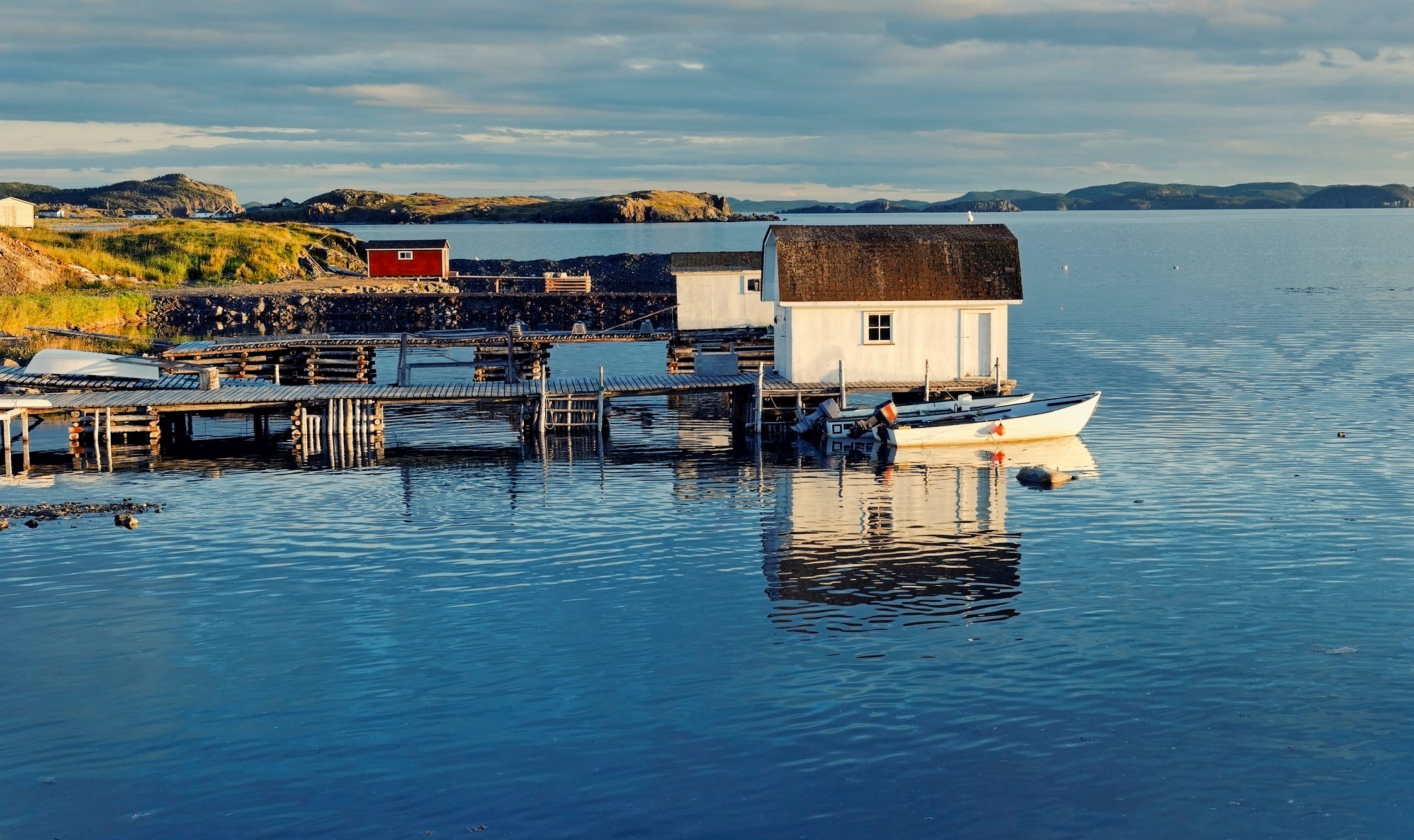
In the early 1980s, I bought a small island with a house on it attached by a floating wooden causeway to a village of 70-some people in Grand Bruit, Newfoundland, Canada. Twenty miles from the nearest road, it seemed like a nice summer getaway when I lived in Manhattan. And I could buy the entire 8-acre island and house for less than $15,000 U.S.
The only way to reach it was by chartered seaplane or a government-sponsored coastal “commuter” boat service.
The French Basques who first settled the south coast of Newfoundland in the early 19th century named the town Grand Bruit—or Great Noise—because of the waterfall that split the town into east and west sectors and led down into a harbor on the North Atlantic Ocean. But the name lost its French pronunciation over time and became known orally as “grand brit.”
I wasn’t lonely when I spent two or three weeks a year in the summer there. It was a short walk over the causeway to the rest of the village. As long as this New Yorker treated the village and its customs with respect, the residents treated me as one of them. On my second visit, after the seaplane landed in the harbor, one of the townspeople powered his open wooden runabout to the plane. As I stepped off the plane’s pontoon and onto the boat, he extended his hand to me with:
Welcome home!
A mudroom in every house led to a kitchen, which was regarded almost as community property. You’d enter a village family’s mudroom, take off your rubber boots, and sit in the kitchen—no invitation needed. It didn’t matter if the homeowners were busy. You’d just sit there until one of them had time to offer you coffee and join you in the kitchen. Or maybe a resident of another house would wander in and chat with you. Every one of the village’s kitchens was a no-charge coffee shop.
I hadn’t begun my Buddhist practice yet, but this was my secular sangha—a community that brought me refuge from my more modern but less civilized life in Manhattan. For its economic life, the town depended on fishing—especially for cod. Three or four “long-liners” went out before dawn in the morning and returned with their catch.
The long-liners were 30-foot boats powered by inboard engines that laid a kilometer-long line with baited hooks every foot or so along the ocean bottom, then anchored at sea for the crew to nap. After sunrise, the boat reversed course, the crew-members having donned yellow hooded raincoats. One turned the spool retrieving the line, while another pulled each fish from its hook and gutted it swiftly, then tossed it into a barrel, tended by another crew member.
I can describe the process because I joined as an observer—once. Not an experience I’d be eager to repeat. When the captain handed me a yellow rain slicker as the boat began the post-nap (and seasickness for me) leg back to retrieve the line, I wondered why. I found out when the fish and guts began flying into the barrel.
Why is a Buddhist author devoted to ahimsa (non-harm) sharing this experience with a readership that includes others? It’s because of what happened “after the cod,” which is the title of an elegantly written article by Mandy McLean published May 6 in the digital magazine Psyche.
McLean was born in Newfoundland in the mid-1980s, as “diesel engines, sonar, and freezer trawlers that could stay at sea for weeks” replaced the long-liners and their Newfie crews and eventually fished out the cod. Coincidentally, I deeded my island away around that time, so I didn’t get to witness the village’s demise.
By 2009, according to Wikipedia, only 31 residents remained—less than half the population of the early 1980s. The Government of Newfoundland and Labrador had long sought to relocate residents from the “outports” to more settled areas. This time, the aging population accepted the payouts and no one was left to hear the great noise of the waterfall.
But the death of Grand Bruit is not just a tragedy of economics or ecology. As McLean points out in her essay, it is a warning about what happens when technology removes the natural limits of a system.
For centuries, the Newfoundland fishery was sustainable because the limits were built into the friction of biological existence. As McLean notes, “you could pull only as much as your back, the daylight, and the weather allowed.” The long-liners were bound by those realities. But the freezer trawlers removed the friction. They made the catch feel endless, right up until the moment the ecosystem collapsed.
McLean asks a telling question: Are we doing the same thing to human connection?
Today, when she is frustrated with a coworker or feeling vulnerable, she finds herself opening ChatGPT instead of calling her close friend. The AI is instantly available. It doesn’t judge. It perfectly mirrors her feelings. It requires no emotional heavy lifting. She notes:
Connection gets easier and easier, until it barely asks anything of me at all. The friction is being smoothed away, but I don’t notice what I’m losing.
Artificial Intelligence is the freezer trawler of human relationships.
Buddhism teaches us that the isolated, independent “self” is an illusion. We exist only through dependent origination—the vast, messy web of causes and conditions, which includes the people who push back on us, who challenge us, and who rely on us. A genuine sangha—like the gathering in the kitchens of Grand Bruit—is built entirely on the friction of this interconnectedness. It is built on dukkha.
You had to put on your rubber boots. You had to walk across a wooden causeway and mud in the damp cold. You had to sit in someone’s kitchen and wait for them to finish their chores before they could pour you a cup of coffee. You had to deal with their bad moods, their exhaustion, and their seasickness.
We became a community not because it was seamless, but because the shared friction wore down our egos and reminded us that we belonged to one another.
An AI chatbot doesn’t need you. It has no biological stakes. It offers simulated empathy without the messy, inconvenient reality of a human life attached to it. It caters perfectly to the illusion of the separate self, giving us all the emotional validation we crave without ever asking us to surrender our independence in return. It is incredibly tempting to outsource our need to be heard to a machine that never gets tired. But if we harvest all our comfort from a frictionless digital algorithm, we will eventually look around and realize we have fished out our own social ecosystems.
The cod never came back to Grand Bruit. Once the balance of dependent origination was destroyed, the town vanished into memory. But as McLean points out, it is not too late for us. We still have the capacity to choose the slower, harder thing.
We can reject the illusion of the frictionless self. We can still choose to put on our boots, walk through the mudroom, and sit in the kitchen with a real human being. The harvest is smaller, and it takes longer, but it is what sustains life.
See my followup, After the Cod, Revisited, for my what I should have added to this.
The reviews of my spiritual memoir are beginning to arrive. From the Midwest Book Review:
“From Pain to Peace” offers a hopeful message: The path to peace is available to everyone.
So whether you are navigating your own grief, seeking spiritual guidance, or curious about how one man turned tragedy into grace, “From Pain to Peace” speaks to the universal longing for healing and wholeness.
Critique: Exceptional, eloquent, deeply personal but with a universal resonance, “From Pain to Peace: How Trauma and Tragedy Teach Us Compassion and Wisdom” is singularly extraordinary and an unreservedly recommended addition to personal, professional, community, and college/university library Contemporary Biography/Memoir collections and the personal reading lists of those with an interest in Tibetan Buddhism, love, loss, and the psychology of trauma.
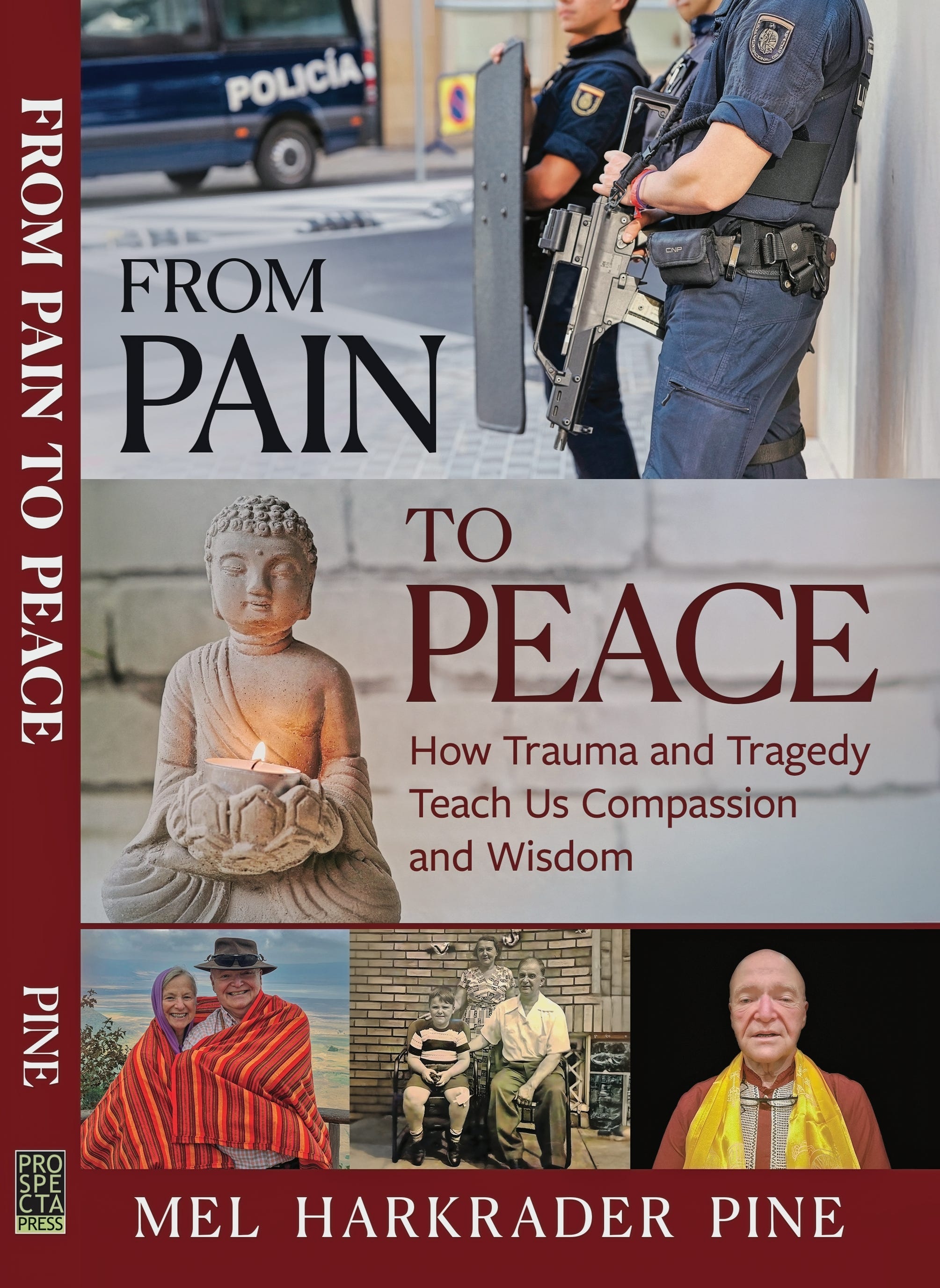
The book goes on sale September 15. You can help the book to a successful launch making an advance purchase now.
From the Pure Land has thousands of readers and subscribers in 43 U.S. states and 41 countries. Subscribe to receive each article in your email inbox.
If this piece resonated, consider sharing it with a friend.
Visit our sister Substack.
Great post. Why the picture of Twillingate which is on the opposite side of Newfoundland from Grand Bruit? I went on a vacation to Newfoundland with a dear friend, recently deceased, Bill Northrup, in 2007. He had a friend with a cabin in Twillingate who was away for an extended period, and we got to use the cabin for 10 days. Every day we wandered around Twillingate and the hiking trails around the town and along the exquisite coastline. One of the best vacations I've ever had. Such amazing natural beauty. I still look at pictures from that trip frequently. So I was very curious about your picture.
A beautiful, yet tragic, story about the people and village of Grand Bruit. A warning of the possible danger of a social ghost town lurking in AI. Thank you Mel!