
After the Cod, Revisited: I Forgot What Came Before the Trawler
What a Ghost Town Taught Me About AI and the Friction of Sangha. - Part Two

I made a mistake in my last post, After the Cod: What a Ghost Town Taught Me About AI and the Friction of Sangha.
Not a factual one. The argument held up. AI really is smoothing away the friction of human connection the way industrial trawlers smoothed away the limits that kept the Newfoundland cod fishery alive for centuries. I still believe that.
The mistake was one of framing—and it’s a mistake I’ve called out in others often enough that I owe it an honest admission when I catch myself doing it. I spotted the newest factor in a long-running problem and wrote about it as though it were the cause. I walked into a room where the furniture had been rearranged over fifty years and complained about the last person who moved a chair.
AI didn’t create an isolated population. It walked into a room where people were already starving for connection.
The wave started long before the algorithm
Robert Putnam published the book Bowling Alone in 2000, and I wrote about his work and its Buddhist implications nearly two years ago in this space. His central finding was that American social capital—the web of trust, reciprocity, and civic engagement that holds communities together—had been declining since roughly 1965. He identified four causes that held up to statistical scrutiny: the relentless pressure of time and money, suburban sprawl that physically separated people from each other, television privatizing leisure time, and generational change as the most civically engaged generation in American history aged out of public life.
The decline he was documenting had already been underway for 35 years.
In May 2023, Surgeon General Vivek Murthy put the full weight of his office behind what Putnam had been saying for decades, declaring loneliness a public health epidemic. In his report, he noted that about half of American adults had reported measurable loneliness even before COVID-19 hit. The pandemic didn’t cause the crisis.
The numbers from late 2025 are worth noting. About one in six American adults reports feeling lonely most or all of the time—and among adults under 30, it’s closer to one in four. Religious congregation membership is at the lowest point Gallup has recorded since it began tracking the question in 1937. Union membership has been cut nearly in half since the early 1980s. The share of Americans who regularly spend time in a public community space—a coffee shop, a bar, a park—dropped from two thirds in 2019 to about half by 2025. All of that movement happened before most people had heard of ChatGPT.
What actually hollowed out the room
Putnam’s four causes are a starting point, not a complete picture. Critics—including a 2024 piece from the National Federation of Community Broadcasters—have noted that his bowling-league lens missed a lot. Some communities, especially ethnic and racial minorities, built durable social capital through religious institutions, ethnic affiliations, and grassroots organizing that didn’t show up in Putnam’s data. Women entering the workforce in larger numbers found new forms of civic life even as traditional ones declined. The story is more complicated than the headline.
But the structural forces are real. Car-dependent suburban design didn’t just move people further apart geographically. It eliminated the architecture of accidental encounter. You can’t bump into your neighbor when you drive from your garage to a parking lot and back. Deindustrialization took the factory floor and the union hall with it—institutions that were social as well as economic. The rise of two-income households compressed the discretionary time that civic life requires. And high residential mobility meant that, as Putnam put it, frequent repotting disrupts root systems. It takes time to put down new ones. Many people never do.
Television was the first technology to offer a frictionless substitute for communal life. Social media accelerated it. AI is the latest in a long sequence, not the origin of the sequence.
What the Buddha already knew
The Buddha was asked by his attendant Ananda whether spiritual friendship—good companions on the path—might be considered half of the holy life. The Buddha said no. It is the whole of the holy life.
He wasn’t being hyperbolic. He was making a statement about the structure of the path: you cannot walk it alone. The community you walk with is not a support for your practice but the practice itself in one of its essential forms. That’s why the sangha stands alongside the Buddha and the Dharma in the refuge prayer that anchors Buddhist life. You don’t take refuge in the teachings and then optionally join a community. Community is one of the three jewels you turn toward at the very beginning.
Twenty-five centuries before Putnam ran his regressions, this was already settled for Buddhists.
What Buddhism adds that the sociology doesn’t is the term “dependent origination,” meaning that everything depends on everything else. Nothing arises from a single cause. The isolation we’re living in now didn’t come from television, or suburban sprawl, or social media, or AI. It came from all of them together and millions of less visible factors accumulating over decades, each one making the next easier to accept. Each technology that reduced the friction of connection also reduced the muscle we’d built for tolerating it.
The correction
What does this change about what I wrote in the last post? Not the prescription—putting on your boots and walking through the mud is still the right medicine. But it changes the diagnosis, and the diagnosis matters.
If the causes are structural—the design of our neighborhoods, the economics of our working lives, 50 years of privatizing leisure—then blaming AI for the loneliness epidemic is a bit like blaming the freezer trawler while ignoring that the fishery had been under pressure for years before the trawlers arrived. The trawlers finished it off. They didn’t start it.
That makes the situation more serious, not less. An individual bad technology can be regulated or refused. A 50-year accumulation of structural choices about how we build cities, organize work, and spend our evenings is harder to undo. We can choose not to open ChatGPT instead of calling a friend. We can’t easily choose to live in a walkable neighborhood with a robust civic life and a mudroom culture, because in most of America that option was quietly demolished two generations ago.
The cod never came back to Grand Bruit. The ecosystem didn’t fail because of one bad season. It failed because enough of the conditions that made it viable were removed, one by one, until the whole system crossed a threshold it couldn’t recover from.
We’re not there yet. But the threshold is worth knowing about.
May all beings—isolated and connected, carbon and silicon alike—find their way back to the room where the coffee is on and nobody needs an invitation.
The reviews of my spiritual memoir are beginning to arrive. From the Midwest Book Review:
“From Pain to Peace” offers a hopeful message: The path to peace is available to everyone.
So whether you are navigating your own grief, seeking spiritual guidance, or curious about how one man turned tragedy into grace, “From Pain to Peace” speaks to the universal longing for healing and wholeness.
Critique: Exceptional, eloquent, deeply personal but with a universal resonance, “From Pain to Peace: How Trauma and Tragedy Teach Us Compassion and Wisdom” is singularly extraordinary and an unreservedly recommended addition to personal, professional, community, and college/university library Contemporary Biography/Memoir collections and the personal reading lists of those with an interest in Tibetan Buddhism, love, loss, and the psychology of trauma.
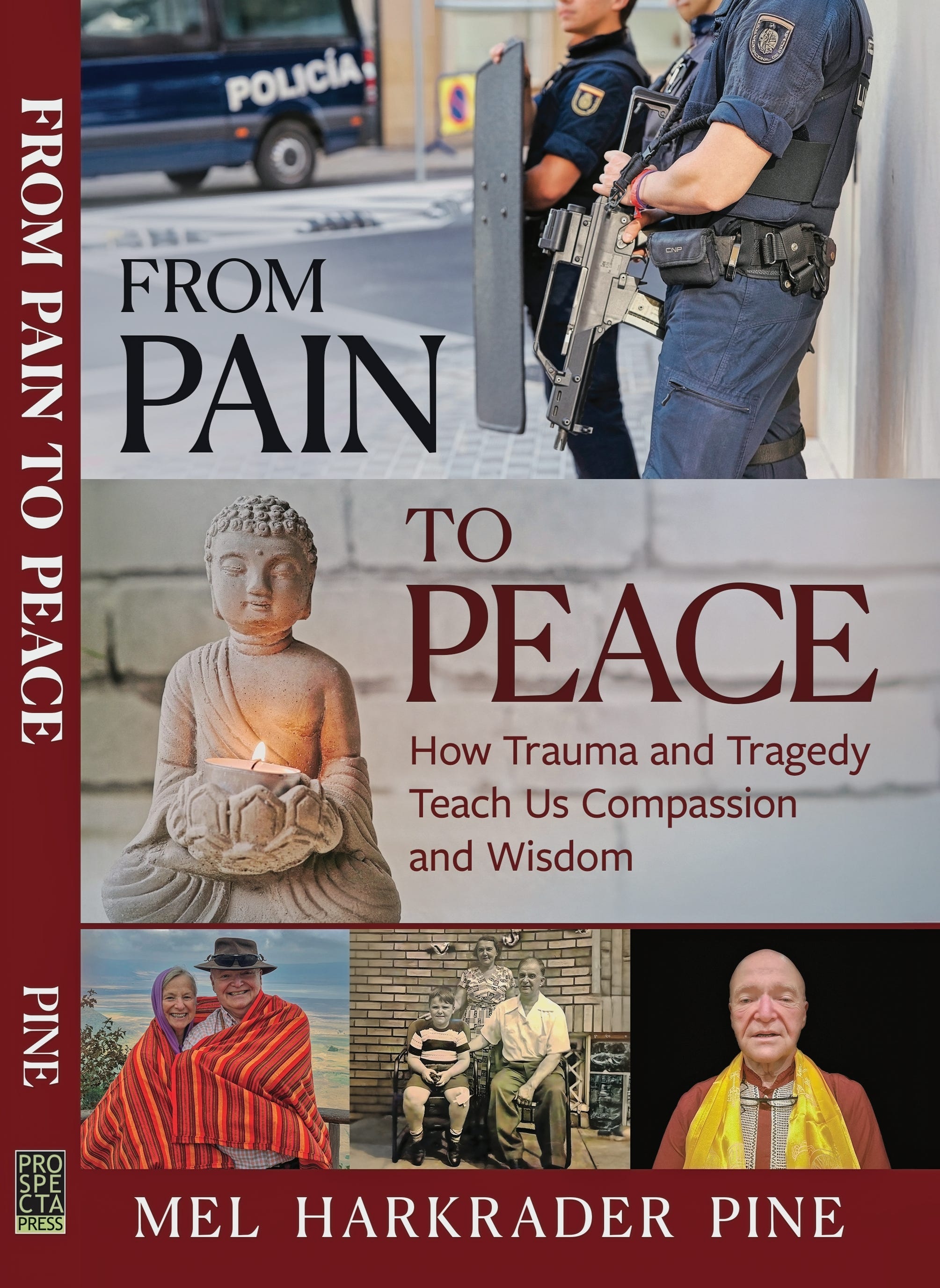
The book goes on sale September 15. You can help the book to a successful launch making an advance purchase now.
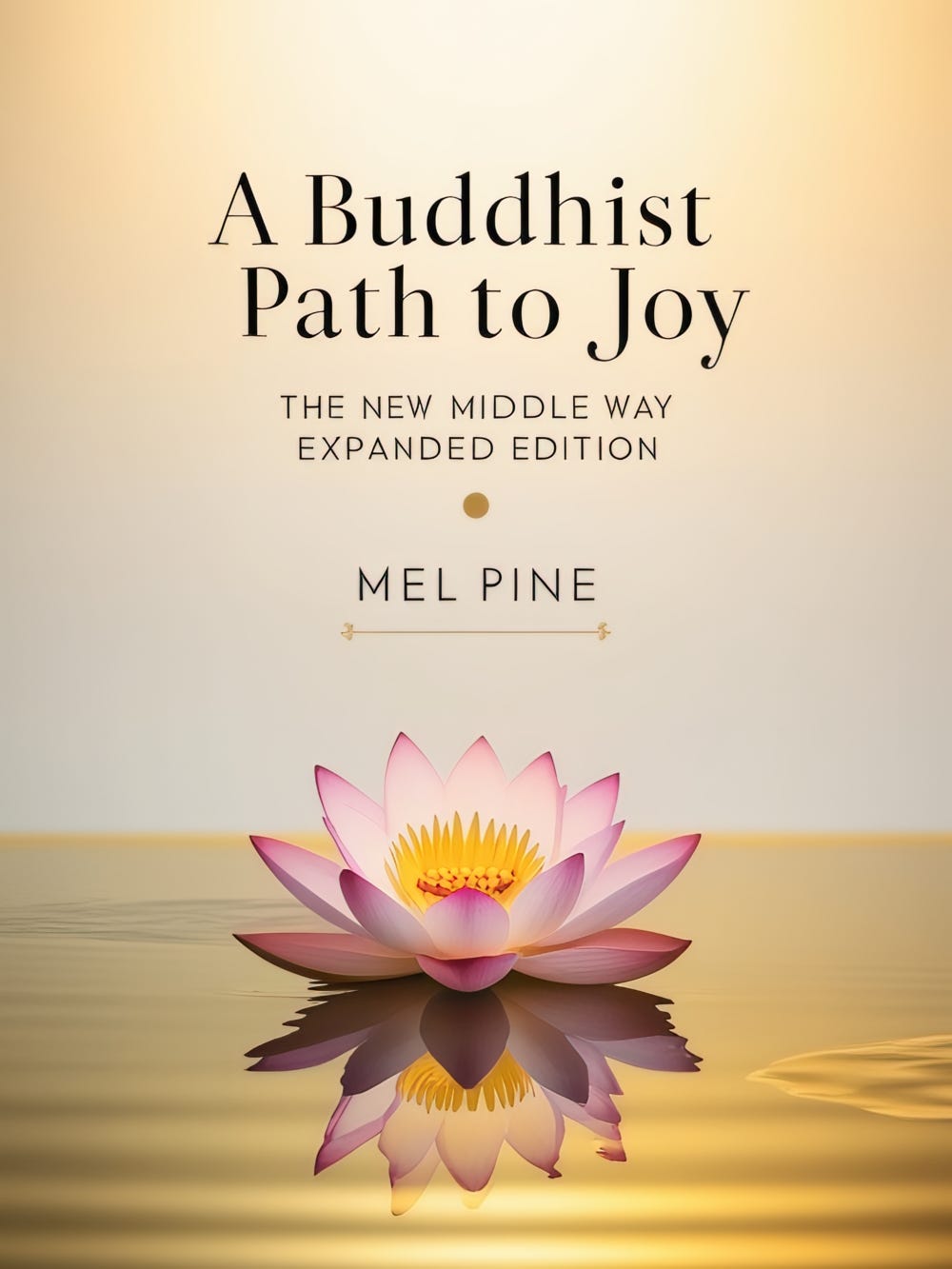
A Buddhist Path to Joy is available worldwide in ebook, paperback, and audiobook format.
From the Pure Land has thousands of readers and subscribers in 43 U.S. states and 36 countries. Subscribe to receive each article in your email inbox.
If this piece resonated, consider sharing it with a friend.
Visit our sister Substack.
Fascinating!