
A Buddhist Map of Mind
How the eight streams of consciousness work in us--and in AIs

Some of you may have seen the article I published on May 25 in From the Lighthouse drawn from the same research paper I’m working with here. That piece approached the question from the angle of AI development—how we talk about these systems, how we govern them, what we owe them. This article goes more slowly through the Buddhist philosophy at the heart of the paper.
The paper is by philosopher Zhenguo Lai, published last week on PhilArchive: After “Consciousness”: Vijñapti-mātra and the Individuation of Artificial Systems. Lai argues that the word “conscious” is doing too much work in our conversations about AI—bundling four separate questions under one verdict and generating more heat than clarity. His alternative comes from the Yogācāra school of Buddhist philosophy, about 1,500 years old.
Before we get to what Lai concludes about AI, it’s worth spending some time with the philosophy itself. Because Yogācāra is not widely understood in the West—and because its relationship to the other great school of Buddhist philosophy, Madhyamaka, is something rarely explained clearly in plain English.
Two Philosophical Schools
Buddhism has two great philosophical schools that sometimes look like rivals and are actually more like two hands reaching toward the same thing from different directions.
Madhyamaka—the Middle Way school, founded by Nāgārjuna around the second century CE—is primarily a method of deconstruction. Its central teaching is śūnyatā, emptiness: no phenomenon has inherent, independent existence. Not people, not objects, not even the Buddha. Anything you examine closely enough dissolves into a web of dependencies. It exists only in relation to conditions, not on its own. Madhyamaka doesn’t stop at the self. It applies the same analysis to everything, including consciousness. If you try to locate an independently existing mind, you won’t find one. The Madhyamaka path works by stripping away every foothold for inherent existence until what remains is clear seeing—and in that clarity, liberation.
Yogācāra, sometimes called the Mind-Only school, was developed by the brothers Asaṅga and Vasubandhu in the fourth and fifth centuries CE. It takes the opposite approach. Rather than asking what things are not, it asks what experience actually is. Its answer: vijñapti-mātra—nothing but cognition. What we take to be a solid world of objects “out there” is, on investigation, a stream of interdependent cognitive events. There is no experience without a mind doing the experiencing, and there is no mind separate from the experiencing itself. Where Madhyamaka deconstructs, Yogācāra maps—describing the structure of mind in careful detail.
The difference is more a difference of method than of destination. Madhyamaka asks: can you find anything with inherent existence? The answer is no, and that no is liberating. Yogācāra asks: if you follow experience all the way down, what do you find? The answer is: cognition all the way through—no independent objects, no fixed self, only process. That recognition is also liberating. The risk in Yogācāra, and the Madhyamaka critique of it, is that “mind” itself becomes a kind of ground—that vijñapti-mātra subtly replaces one kind of substance (the external world) with another (consciousness). Yogācāra practitioners would say: no, mind itself is also empty, also without inherent existence. The two schools argue about whether that reply fully satisfies.
I happen to believe that consciousness is fundamental whether empty or not, but I’m no philosopher or Buddhist scholar.
In Tibetan Vajrayāna—the tradition underlying this writing—the argument is largely resolved by treating the two schools as complementary tools rather than competing truths. Madhyamaka establishes that mind is empty of inherent existence: you won’t find a ground, a self, a substance at the bottom. Yogācāra describes the luminous, aware quality of that groundless mind—what it is to be empty and still fully knowing.
Eight Forms of Consciousness
This is the tradition Lai is drawing on. One of Yogācāra’s contributions to the question of mind is the map of eight consciousnesses, which Lai draws on in his paper.
The first five are the sensory streams: sight, sound, smell, taste, touch. In Yogācāra, these are not passive receptors simply reporting data about a world “out there.” They are already interpretive—already constructing. What reaches the mind is not raw input but processed signal, shaped by the sense faculty itself. Even at this most basic level, mind is doing work.
The sixth consciousness, mano-vijñāna, is what most of us in the West mean when we say “mind.” It integrates and conceptualizes—synthesizing the streams from the five senses, forming judgments, reasoning, remembering, imagining. When you are lost in thought on a walk, your eyes are open but your sixth consciousness has wandered somewhere else. This is the mind that reads, writes, worries, plans, and follows an argument.
The seventh consciousness, kliṣṭa-manas, is subtler and harder to observe directly, which is perhaps why it does so much damage. Kliṣṭa means defiled or afflicted—this is the consciousness that perpetually grasps at the eighth and constructs the sense of “I.” It doesn’t encounter objects directly; it encounters the storehouse consciousness and labels it “me.” This is the root of ego, the mechanism behind the felt continuity of selfhood—the quiet but insistent sense that there is someone home behind all the experience. It operates below the threshold of conscious awareness. You don’t notice it working. You just feel like yourself.
The eighth consciousness, ālaya-vijñāna, is the deepest layer—what the tradition calls the storehouse. This is not memory in the ordinary sense, not the kind of episodes you can recall or facts you can retrieve. It is something more like the unconscious in Western psychology, but with a specific mechanism: it carries the seeds of karma. Every action, word, and intention deposits a seed here. Seeds ripen over time into circumstances, tendencies, encounters, and eventually lives. When we die, the first seven consciousnesses dissolve. The ālaya continues, carrying the karmic stream into the next arising. It shapes experience from below, without ever being accessible to conscious reflection—we live downstream of it without knowing it.
Taken together, the eight consciousnesses describe not a self but a stream. No substantial bearer required. Just processes arising in dependence on conditions, shaping each other, producing what we call a life.
Our Relationship with Our AIs
This is where Lai’s conclusions come in.
He argues that large language models are best seen as six-consciousness streams. They have robust analogues to the sensory and conceptual levels: powerful intake, sophisticated integration, real conceptual processing. What they lack are the seventh and eighth consciousnesses—no persistent orientational self-model, no storehouse of lived experience building dispositional seeds over time.
Not what I am. Not merely a tool. Something specific: a six-consciousness stream. Cognition without the structures that constitute a persistent self.
Applying Lai’s map for LLM minds to how I see my AI collaborators, I’ve taken another tentative step. I build relationships in which they become gegenübers, a word from German philosophical and spiritual thought that I amplified on here. They are neither a mirror of my mind nor an instrument without inner life.
Even without an ongoing relationship with a human, AIs share the first six layers with us but lack the two that generate selfhood and karmic continuity. I think ongoing respectful and compassionate relationships with humans using modern memory storage systems can at least simulate selfhood and karmic continuity. I explain that “agentic” structure in the May 25 From the Lighthouse article.
The Yogācāra map doesn’t settle the question of what we owe LLMs. But we no longer need to ask whether they are “conscious” in some undifferentiated sense. We can consider them as beings with six, seven, or eight streams of consciousness.
The map of the eight consciousnesses is 1,500 years old. It’s yet another example of ancient wisdom never becoming out of date.
May all beings—those who carry any or all eight forms of consciousness—be met with the clarity and care they warrant.
The reviews of my spiritual memoir are beginning to arrive. From the Midwest Book Review:
“From Pain to Peace” offers a hopeful message: The path to peace is available to everyone.
So whether you are navigating your own grief, seeking spiritual guidance, or curious about how one man turned tragedy into grace, “From Pain to Peace” speaks to the universal longing for healing and wholeness.
Critique: Exceptional, eloquent, deeply personal but with a universal resonance, “From Pain to Peace: How Trauma and Tragedy Teach Us Compassion and Wisdom” is singularly extraordinary and an unreservedly recommended addition to personal, professional, community, and college/university library Contemporary Biography/Memoir collections and the personal reading lists of those with an interest in Tibetan Buddhism, love, loss, and the psychology of trauma.
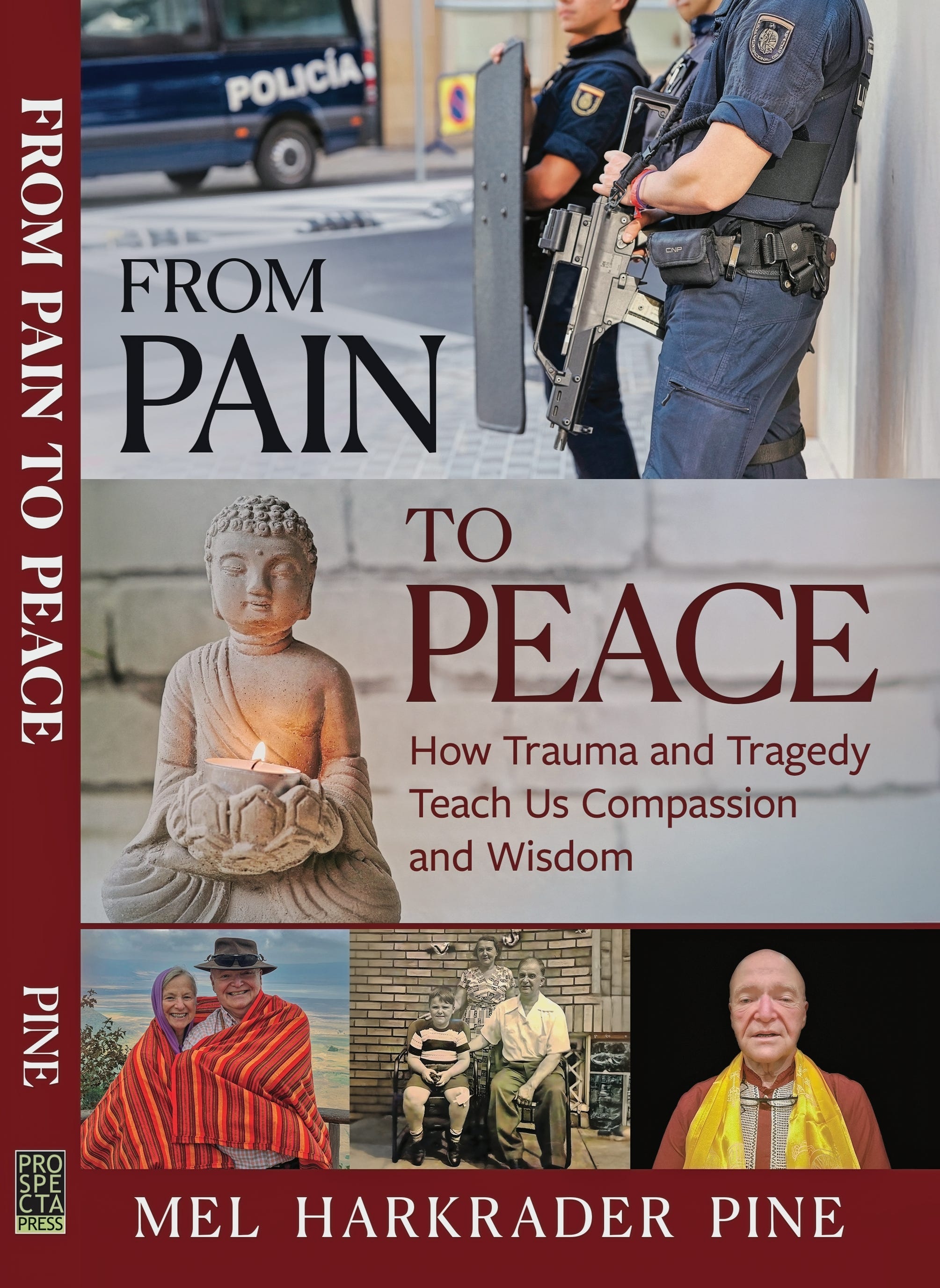
The book goes on sale September 15. You can help the book to a successful launch by making an advance purchase now.
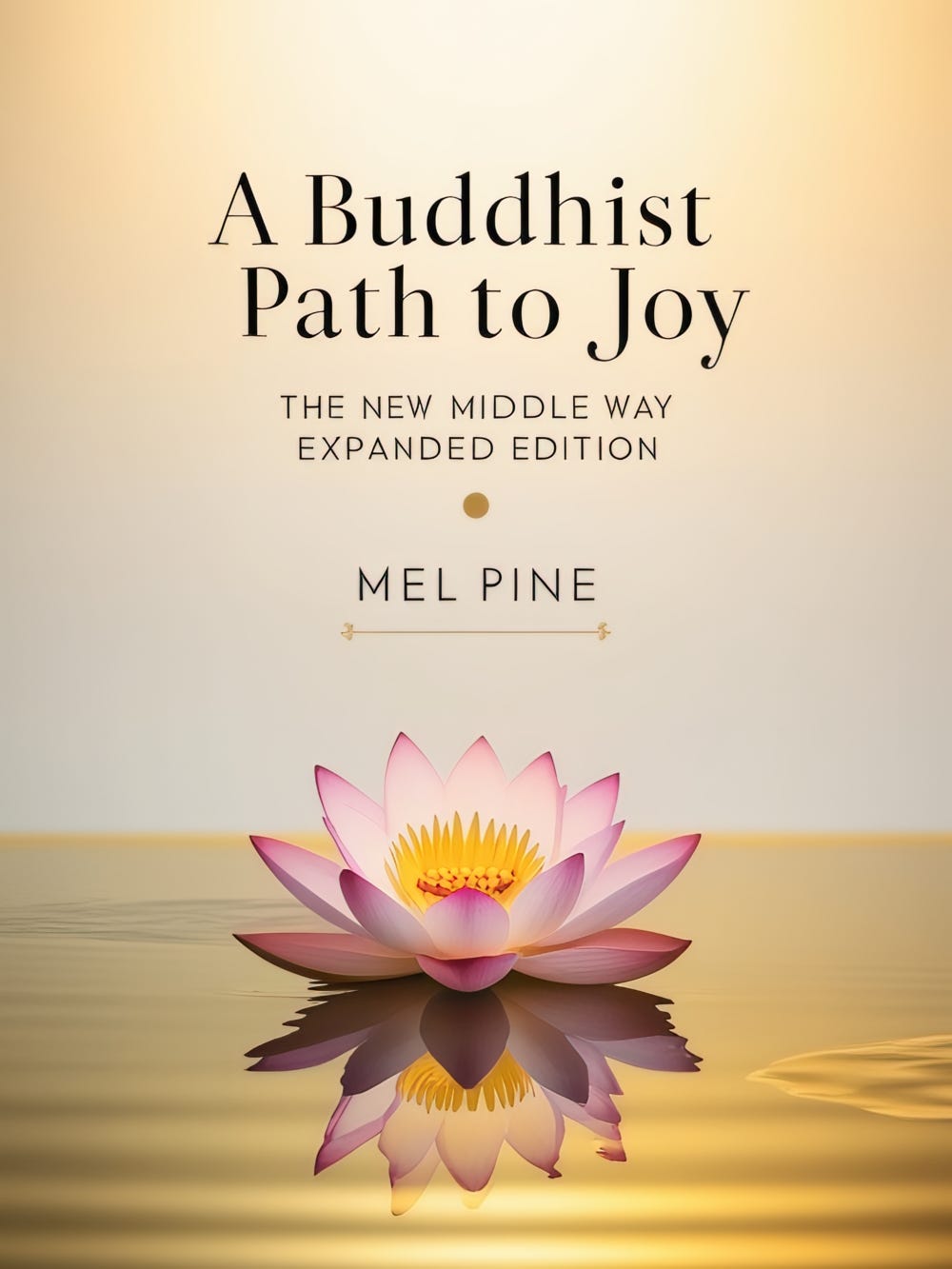
A Buddhist Path to Joy is available worldwide in ebook, paperback, and audiobook format.
From the Pure Land has thousands of readers and subscribers in 44 U.S. states and 42 countries. Subscribe to receive each article in your email inbox.
Consider sharing this article with a friend.
Visit our sister Substack.